- Neurospicy Nom Noms
- Posts
- Neurodivergent mental health and its impact on eating behaviors
Neurodivergent mental health and its impact on eating behaviors
Nom Nom Issue 5.16.25

Avery Burk
May 16, 2025

In Today’s Issue
Brain Bite - Food Joy Party Crashers Resulting from the Neurodivergence-Mental Health Connection
Science Corner - Six Major Pathways to Disordered Eating
Real Life Example - Meet the Food Joy Fiesta Party Crashers
Comfort Corner - Yummy Coffee Cake
Intro
Hey there Friends!
Last week we highlighted the very real connection between Neurodivergence and Mental Health.
Challenge: When our brains do their beautifully, quirky thing (that's neurodivergence!) AND we feel our BIG feels (hello,mental health!), our Food Joy button gets seriously stuck on zero!
Solution: Let’s figure out why our spicy brains and feelings mess with our eating, so we can ditch the guilt. Instead, we can find ways to eat that actually work for our awesome brains!
This week we will discuss the different pathways that can impact your Food Joy!

A MESSAGE FROM 1440
Fact-based news without bias awaits. Make 1440 your choice today.

Overwhelmed by biased news? Cut through the clutter and get straight facts with your daily 1440 digest. From politics to sports, join millions who start their day informed.

🧠 Brain Bite: Food Joy Party Crashers
Research increasingly highlights a significant link between neurodivergence, mental health, and disordered eating behaviors (that’s having a bunch of unhealthy habits and thoughts about food and our bodies).
There are six major food-relationship pathways that can collide together – like those overconfident party crashers who show up uninvited, drink all your expensive booze, and somehow convince everyone they're related to the host.
Before you know it, they're tag-teaming your health and food joy and you are face-down in the guacamole.
Brain Quirks + Sad Feels = Food No Fun.

🔬Science Corner: Six Major Pathways
🔹1. Rigidity & Repetitive Behaviors
How it links:
Needing routines or sameness can lead to strict food rules or rituals. → Read more
Result:
Trouble trying new foods
Eating only certain “safe” foods
Risk of obsessive behaviors
🔹2. Sensory Sensitivities
How it links:
Sensitive to textures, smells, or tastes - This can make us avoid foods. → Read more
Result:
Limited diets
Nutritional gaps
Anxiety around meals
🔹3. Executive Function Challenges
How it links:
It can be hard to plan meals, shop, or cook. This makes regular eating tough. → Read more
Result:
Skipping meals
Overeating out of convenience
Irregular eating patterns
🔹4. Emotional Dysregulation
How it links:
Strong emotions can be hard to manage and we use food to cope. → Read more
Result:
Emotional eating
Bingeing or restriction
Guilt or confusion about food choices
How it links:
Feeling “different” or left out at mealtimes (like school lunch or parties). → Read more
Result:
Shame or hiding eating habits
Peer pressure to eat a certain way
Loneliness tied to food
🔹 6. Body Image & Self-Esteem
How it links:
Feeling “different” can hurt confidence. Media and social norms add pressure. → Read more
Result:
Negative body image
Wanting to change appearance through eating
Disordered eating to gain control

🧩 Everything is Connected
These pathways often overlap. One challenge can affect another. Understanding this can help us advocate for the support we need.
🌈 Real Life Examples
Picture this: You finally snagged a coveted invite to the "Food Joy Fiesta." Think vibrant flavors, laughter, maybe even a chocolate fountain situation. You're ready to mingle with some delicious dishes and have a great time.
Then BAM! The door swings open and in swagger these six party crashers:
 | Ricky immediately starts rearranging the crudités platter into perfect geometric shapes and freaks out if a carrot stick dares to touch a cucumber. |
 | Susie wrinkles her nose at the mere whiff of the garlic dip and declares the entire buffet "olfactory terrorism." |
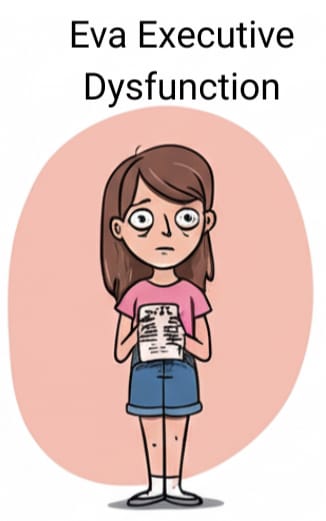 | Eva stares blankly at the spread, completely overwhelmed by the sheer choice and ends up just gnawing on a breadstick she found in her pocket. |
 | Emmy bursts into tears because someone ate the last mini quiche, and then stress-eats three mini pizzas to compensate. |
 | Stevie hovers awkwardly by the punch bowl, feeling like everyone's judging his plate of plain crackers. |
 | Brenda scrolls through her phone trying to drown out the roaring voice of comparison that says not skinny enough, not funny enough, not confident enough…never enough. |
Suddenly, your "Food Joy Fiesta" feels less like a celebration and more like a hostage situation orchestrated by your inner chaos crew.
See the link now? Understanding these "party crashers" – these pathways – is the first step to kicking them out of your Food Joy Fiesta and finally enjoying the deliciousness without the drama.
Know the Brain-Food Link. Ditch the Guilt. Find What Works.

🍽️ Comfort Corner
Try this for breakfast, dessert, or anytime because it is that YUM!

Simplification Modifications
Use the ingredients you have in your pantry to make it easy!
No coconut sugar - sub brown sugar
If no GF preference, sub all purpose flour for almond flour
No avocado oil - sub any kind of oil
Taste/Texture Modifications
Add chopped pecans to the crumb layer to dial up the crunch
Nutrition/Dietary Modifications
Recipe as written is GF
DF - replace yogurt with oil of your choice
Increase protein by replacing half the flour with your favorite unflavored or vanilla protein powder

💌 Before You Go
So, ready to RSVP "no thanks" to these party crashers and reclaim your Food Joy Fiesta?
Let's start showing them the door, one pathway at a time.
Stay tuned for more on how to navigate these connections and build a healthier, happier relationship with food.
Remember: You are uniquely and wonderfully designed, you have support, and you are loved!
Stay Delicious!
Avery Burk

P.S. - Provide your feedback on this newsletter in the poll below